
Sea Turtles, Dolphins, and Snorkeling in Martinique: The Complete Guide
Ever since settling on the island, underwater exploration has become our great passion. It’s simple: we put on our fins, mask, and snorkel every single week. Indeed, we love observing sea turtles in their natural habitat. This ever-renewed sense of wonder has become the guiding thread of our island escapes.
The coastline of Martinique offers a fascinating underwater diversity. In the North, you will find dramatic black sand coves. In the South, sweeping turquoise lagoons stretch out before you. Thus, every single water entry reserves a different atmosphere. Furthermore, the Caribbean Sea displays unbelievable generosity. The coastline provides a mesmerizing spectacle where you will admire the graceful ballet of sea turtles and breaching dolphins. Moreover, coral reefs and submerged sculptures complete this incredible tableau.
Whether you are a snorkeling enthusiast or a seasoned scuba diver, this aquatic richness will captivate you. Consequently, make sure to add these outings to your itinerary! To organize your overall trip logistics, check out our complete destination guide to visiting Martinique.
In this article dedicated to the island’s marine treasures, we share our favorite snorkeling spots, our tips for eco-responsible observation, as well as the finest nautical excursions to experience in Martinique.
In this guide
Observing Sea Turtles in Southern Martinique
Exploring the Coast on a Boat Tour
Unique Snorkeling: Submerged Sculptures & Historic Shipwrecks
Practical Field Tips for Underwater Outings
Frequently Asked Questions: Turtles & Dolphins in Martinique
Observing Sea Turtles in Southern Martinique
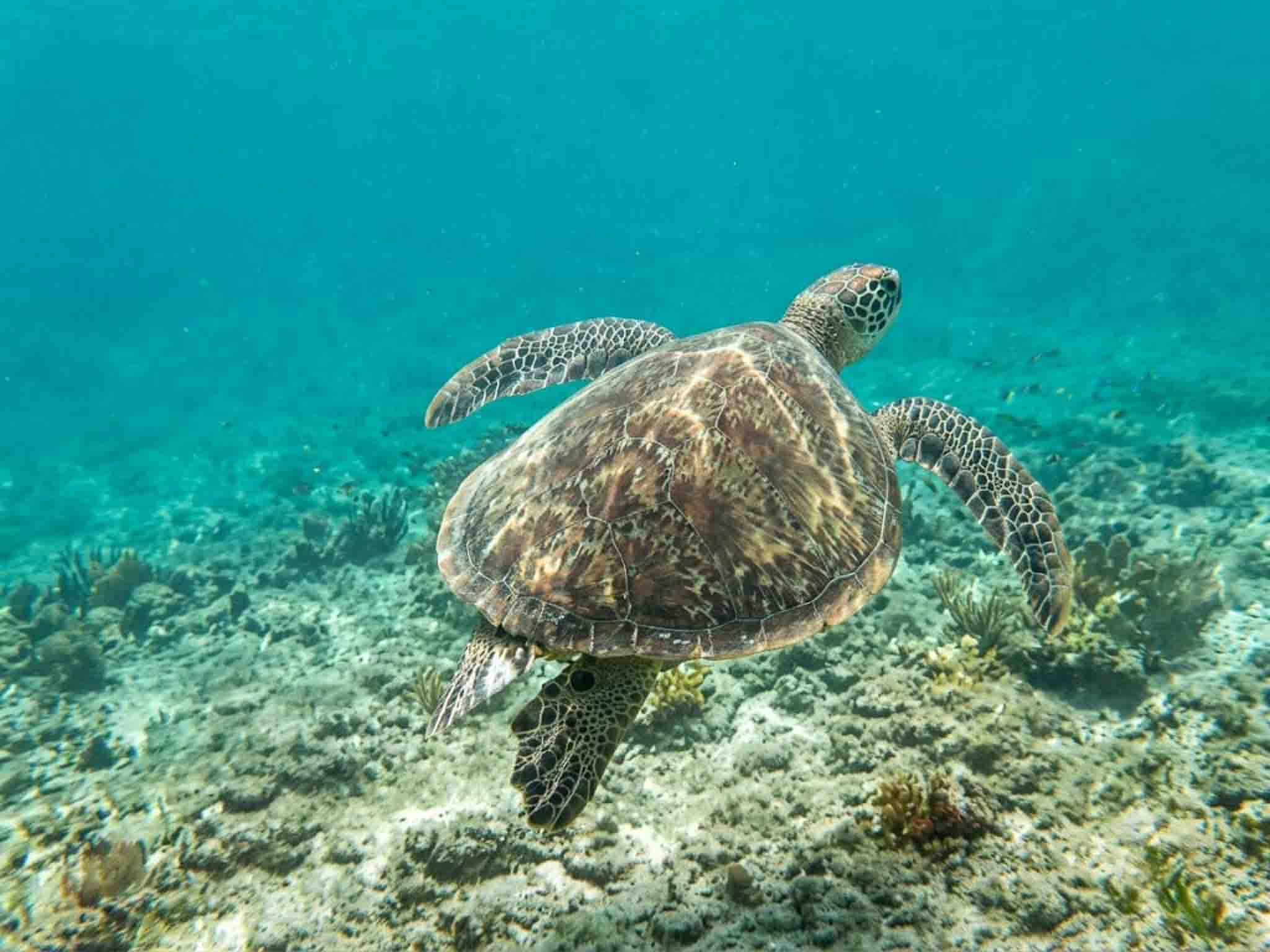
Without a doubt, this is the most magical and sought-after underwater experience in Martinique. Indeed, the warm waters of southern Martinique provide an ideal habitat for two iconic species. On one hand, the green sea turtle (Chelonia mydas) frequents shallow seagrass beds. On the other hand, the hawksbill turtle (Eretmochelys imbricata) prefers rocky reefs. Consequently, you will easily encounter them along underwater drop-offs.
The Must-See Spots of Les Anses-d'Arlet
The municipality of Les Anses-d’Arlet gathers the dense nesting and feeding grounds on the island:
Anse Dufour: The spot world-famous as the king of turtle watching. Indeed, this small golden sand cove shelters a very rich seagrass bed just a few yards from the shore. According to locals, it is frequent to cross paths with several green turtles simultaneously, peacefully grazing. Nevertheless, to be completely honest, we haven’t had the chance to run into one right there yet!
Anse Noire: Accessible via a large wooden staircase, this unique black volcanic sand beach is separated from Anse Dufour by a single steep hill (morne). Here, the waters are deeper and rockier. Thus, it is the ideal spot to observe hawksbill turtles along the sea cliffs. Furthermore, you will run into schools of fusiliers and squids.
Grande Anse d’Arlet: A massive bay lined with coconut trees, featuring a calm, turquoise lagoon. Turtles move across the entire length of the beach. It is the ideal place to swim alongside them in crystal-clear water while keeping your feet on the ground near the shore. It is one of our favorite spots where we have the chance to admire numerous turtles every single time.
Our Tips for a Magical and Responsible Observation
Set your alarm very early: This is our golden rule. Arrive on the beach before 7:00 AM. Consequently, the water remains perfectly calm and clear. Furthermore, marine animals don’t suffer from tourist crowds yet.
Keep your distance: Respect a safety zone of at least 6 to 10 feet (2 to 3 meters). Never attempt to touch, chase, or corner them.
Give them clear access to the surface: When a turtle ascends to breathe, immediately step out of its vertical path.
Adopt the UV Rashguard reflex: To protect seagrass beds and coral reefs, favor a UV rashguard shirt rather than sunscreen, even those labeled “eco-friendly.”
Other Unmissable & Less Touristy Spots to See Turtles
While Les Anses-d’Arlet remains the most famous area, Martinique is filled with other sheltered bays where seagrass beds attract green and hawksbill turtles.
The main advantage? These sites are often far less crowded by classic tourist circuits.
Anse Madame Beach (Schoelcher): The Lovely Surprise Near Fort-de-France
This is a spot we particularly appreciate for its tranquility and easy access from Fort-de-France. Located in the town of Schoelcher, Anse Madame shelters expansive underwater seagrass beds rich in marine life.
What You’ll See: Green turtles coming to graze just a few dozen yards from shore in water that is generally very calm in the morning. Also, the site is frequently visited by small stingrays and boxfish.
Our Tip: Enter the water near the nautical club or the pier and gently follow the seagrass beds to the right. Since this beach is popular with locals in the late afternoon, prioritize a 7:00 AM to 9:00 AM window to have the lagoon all to yourself.
Anse Figuier (Sainte-Luce): Ideal for Families & Underwater Trail
Deep in the south of the island, Anse Figuier combines a white sand beach, turquoise waters, and a very sheltered swimming area.
What You’ll See: Heading out toward the center of the bay over the seagrass beds, green turtles are easily spotted. Toward the rocks on the sides, the marked underwater trail lets you cross paths with hawksbill turtles, sea fans, and a multitude of tropical fish.
Practical Perk: The beach features plenty of shaded gazebos (carbets) and outdoor showers—perfect for extending your day after your snorkeling session.
Cap Salomon and Anse Mathurin: For a Wilder Encounter
Clinging to the steep coastline between Grande Anse d’Arlet and Anse Noire, these small coves are accessible only on foot (via the coastal trail) or by sea (via kayak/paddleboard).
What You’ll See: The seabed drops off more quickly into rocky walls. This is the domain of hawksbill turtles, who come searching for sponges and small crustaceans in the rock crevices.
How to Get There Differently: By kayak from Grande Anse, the paddle takes about 20 minutes. It is one of the most beautiful routes on the island to combine paddling and underwater observation far from developed beaches.
Exploring the Coast on a Boat Tour
If you want to avoid midday parking hassles at Les Anses-d’Arlet or combine snorkeling with a full day of sailing, the best option is to cruise along the leeward Caribbean coast by boat.
Several tours depart each morning from the Les Trois-Îlets marina or Pointe du Bout. Thus, these excursions allow access to wilder coves (like Anse Mathurin or Anse Noire under sail) alongside a passionate crew.
Sailboat & Turtle Snorkeling Excursion: Set sail for a half-day or full-day cruise along the Caribbean coast. These outings include snorkel gear loan, a guided stop over turtle seagrass beds, and a refreshment/Creole platter break on board. Check availability and book your catamaran tour to Les Anses-d’Arlet on GetYourGuide.
Dolphin and Whale Watching on Martinique's North Coast
While southern Martinique is the kingdom of sea turtles, the North Coast—stretching from Case-Pilote up to Saint-Pierre—is the privileged territory of marine mammals. This zone forms part of the protected Agoa Sanctuary. Indeed, deep underwater trenches lie just a few hundred yards from the shore.
Which Species Can You Observe off the North Coast?
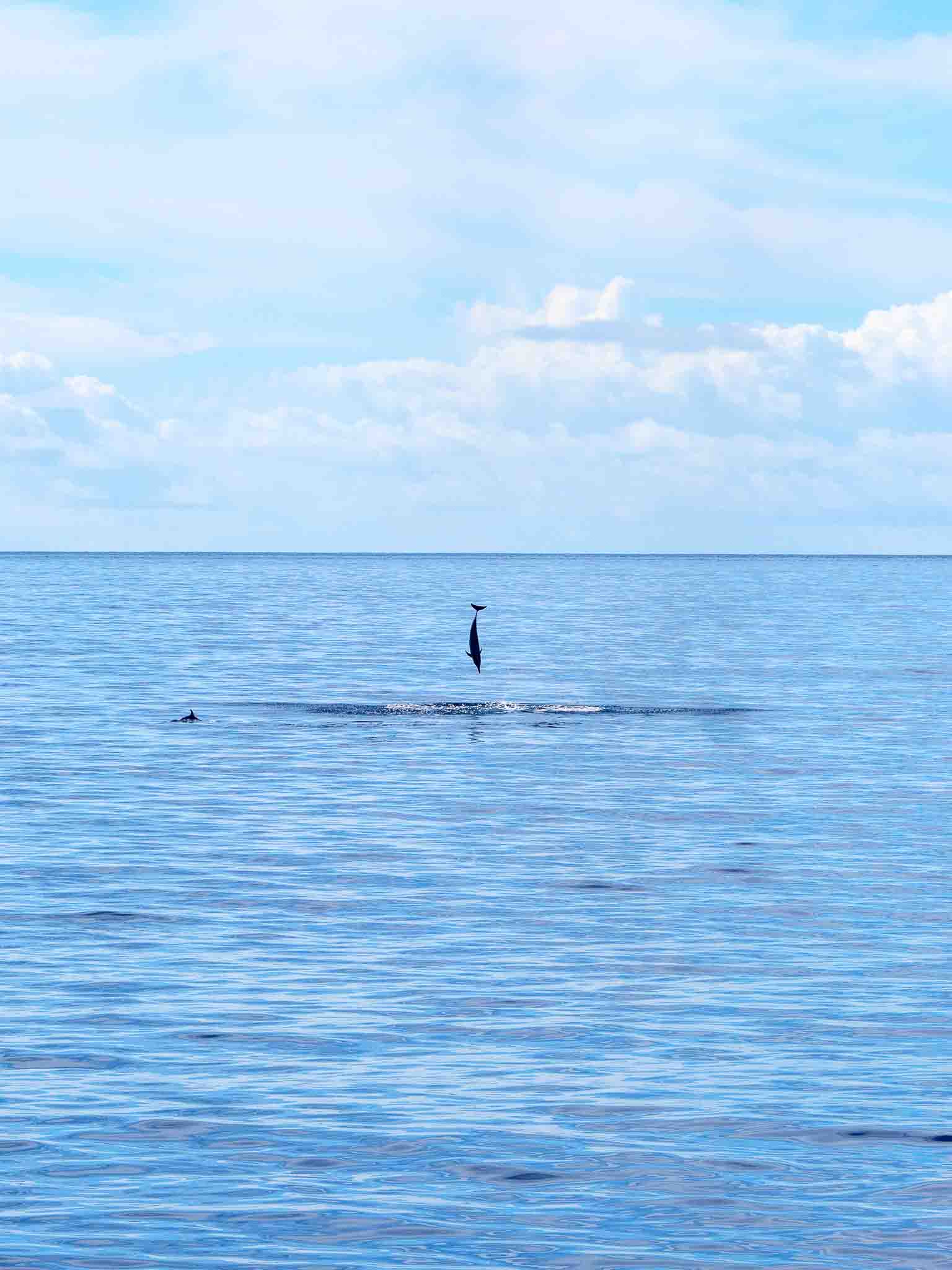
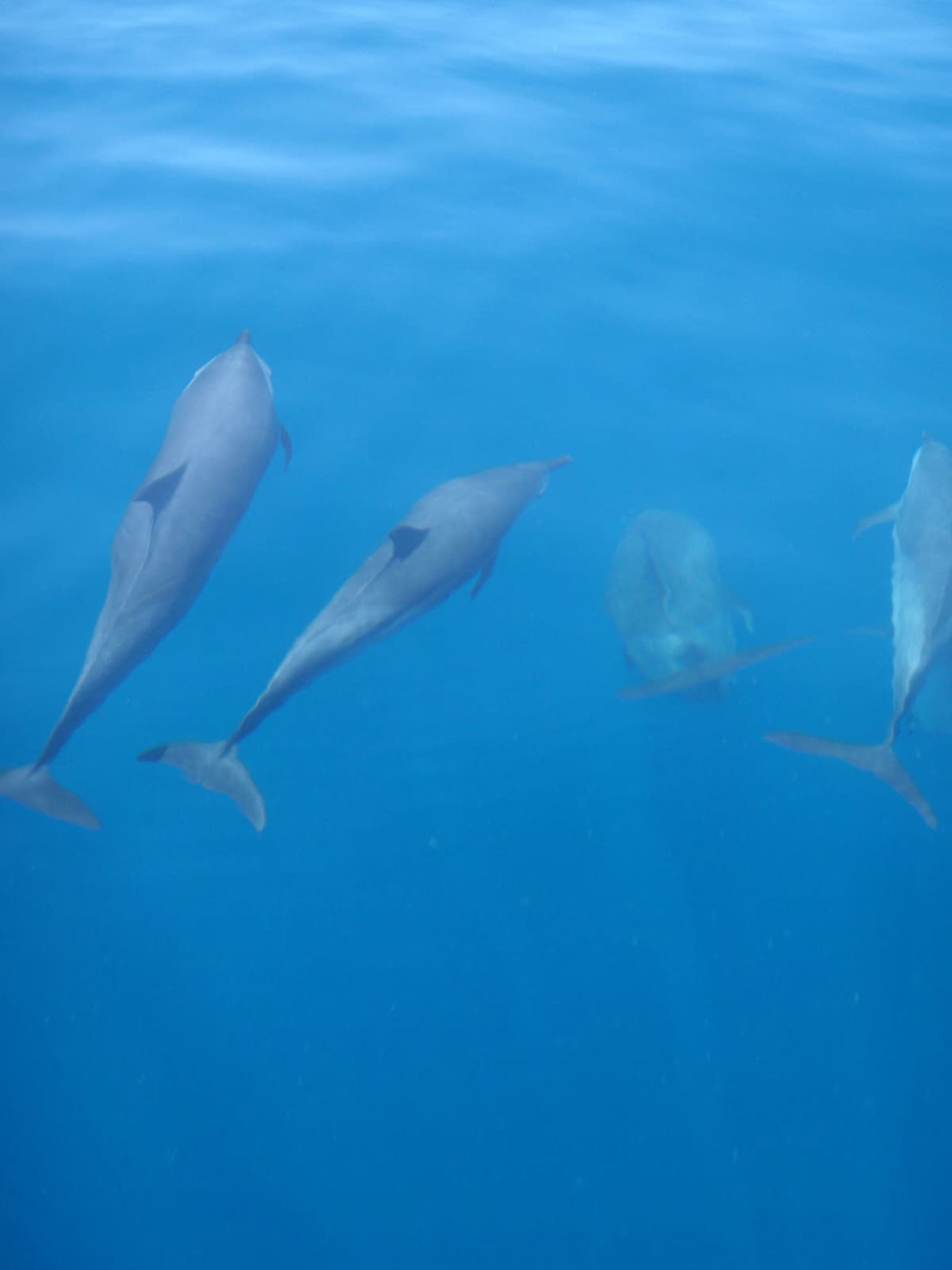
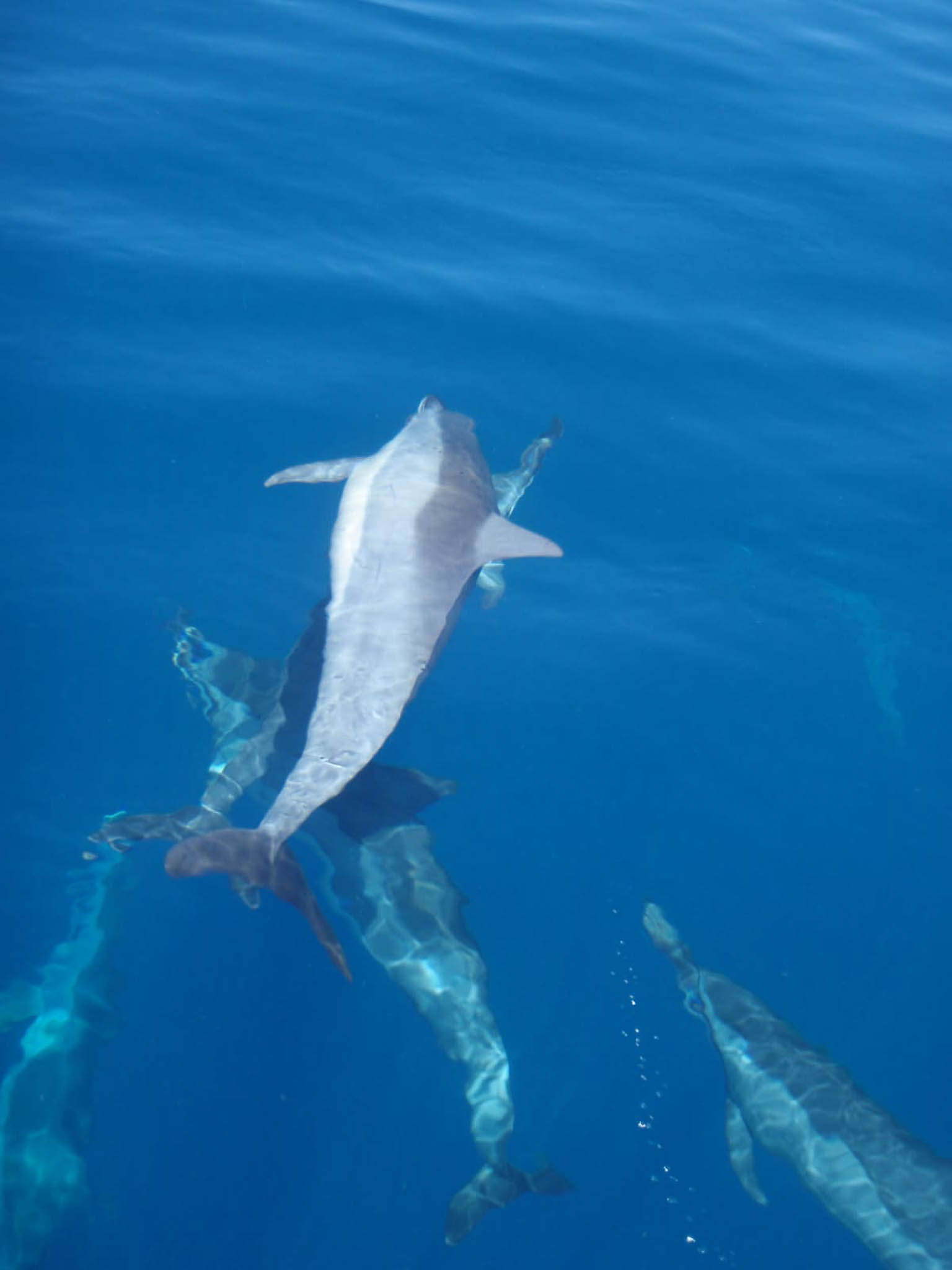
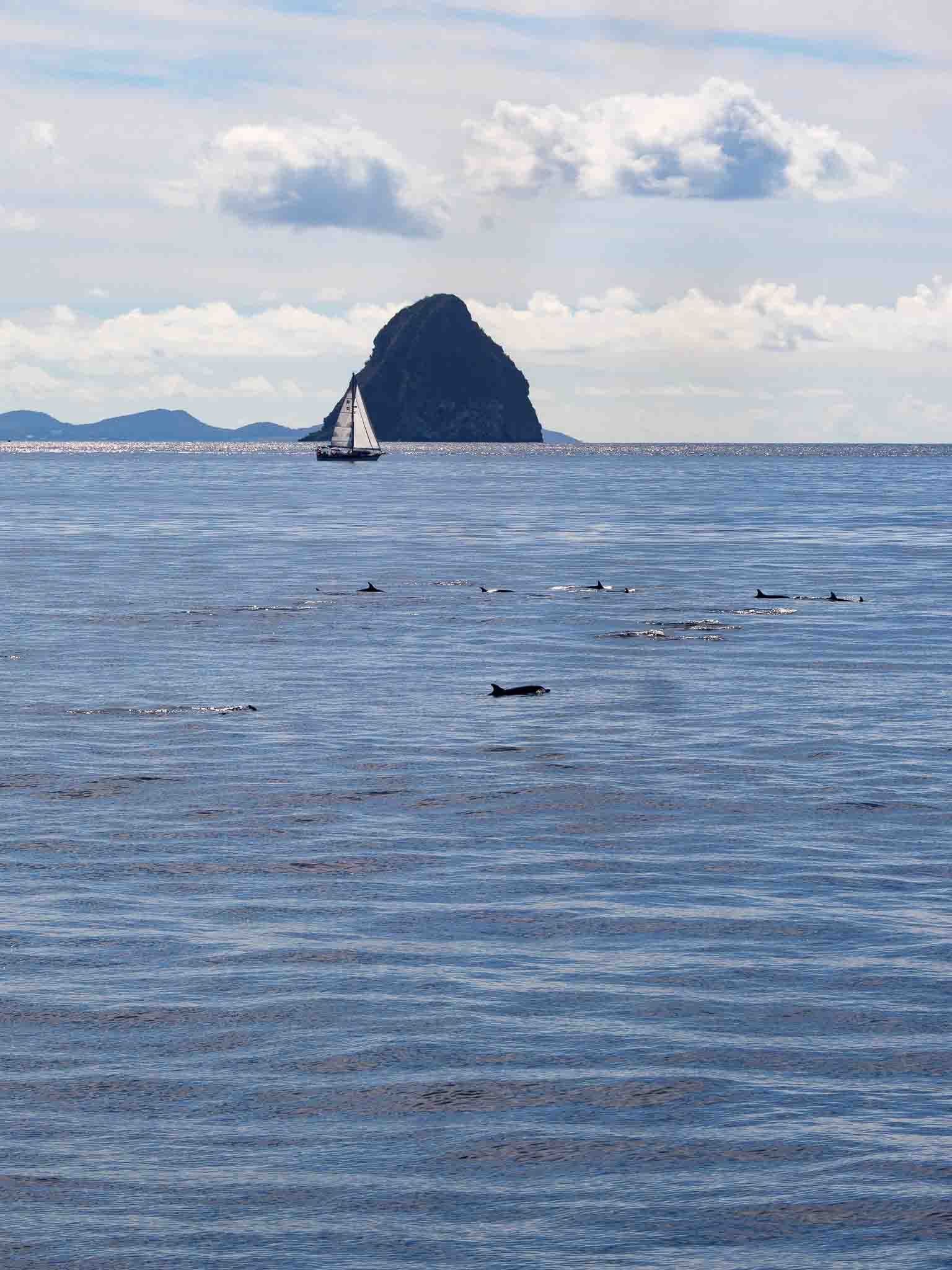
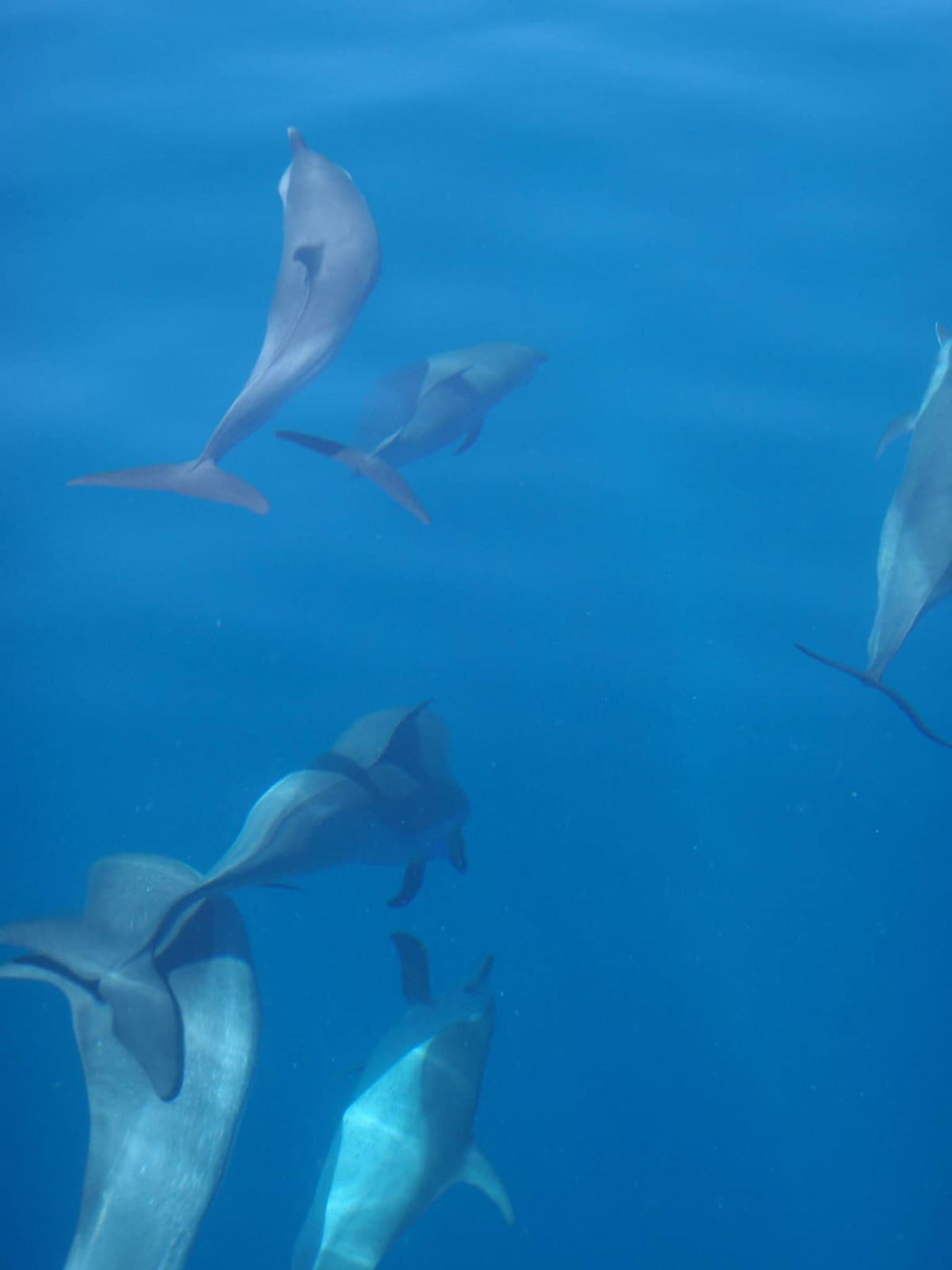
Pantropical Spotted Dolphins: By far the most numerous and playful. They often move in spectacular pods of dozens (or even hundreds) of individuals and love playing in the bow wave of boats.
Bottlenose Dolphins (Tursiops): Larger and curious, they are spotted in small family groups along the leeward coast.
Large Cetaceans: Martinique has a resident population of sperm whales off the northern coast. During the dry season (February to May), humpback whales also arrive to give birth and protect their calves in the warm waters of the archipelago.
Ethical Charter: Observing Without Disturbing
Dolphin watching must imperatively be done with strict respect for wild marine life. The rules enforced within the Agoa Sanctuary are clear:
In-Water Swimming Forbidden: It is strictly forbidden to jump into the water to swim with wild dolphins. Consequently, observation takes place exclusively from the boat deck to avoid disrupting their hunting or resting cycles.
Slow Approach Speeds: Vessels must reduce speed starting in the pre-approach zone (300 meters) and maintain a safety distance of at least 100 meters. Encircling a pod or separating a mother from her calf is prohibited.
Limited Observation Time: Time spent near dolphin pods is strictly limited to minimize underwater noise pollution.
Through Zgoryth_shots’ Lens
Spotted dolphins move extremely fast. To freeze their jumps above the water, set your camera to continuous burst mode with a very fast shutter speed (minimum 1/1000s). Use a telephoto lens or optical phone zoom rather than digital zoom to retain crisp sharpness.
Sea Excursions: Our Experience & Bookings
To meet marine mammals, departures leave mainly in the morning from piers in Le Carbet, Case-Pilote, or Les Anses-d’Arlet. The sea is generally very calm early in the morning, making it much easier to spot dorsal fins and blows on the surface.
Our Tested & Approved Favorite: Calypso Croisières
During our sea outings, we had a huge crush on Calypso Croisières. Even though we have no financial partnership with them, this is an address we recommend with our eyes closed!
Indeed, the crew is extraordinarily warm, passionate, and flawless regarding Agoa approach rules. Everything is done calmly without ever forcing contact with dolphin pods. The morning then extends with a convivial snorkeling break in a wild cove accessible only by sea.
Book Your Guided Dolphin Encounter If you want to plan ahead and secure your spot aboard a vessel committed to the Agoa charter (catamaran or speed boat), remember to book in advance. Departures operate from both the north and south of the island. Book your dolphin excursion and compare prices on GetYourGuide.
Unique Snorkeling: Submerged Sculptures & Historic Shipwrecks
Martinique doesn’t stop at offering naturally gorgeous seabeds: it also offers unique underwater experiences combining contemporary art, historical memory, and scuba diving adventures.
:Saint-Pierre's Submerged Sculptures: Manman Dlo and Yémaya
Located in Saint-Pierre Bay, just a few dozen yards from shore, two monumental artworks rest on the sea floor. Designed by Martinican artist Laurent Valère, these sculptures pay vibrant homage to ocean legends and island heritage.
Manman Dlo: Submerged in 2004 at a depth of roughly 20 feet (6 meters), this colossal concrete mermaid weighs over 20 tons. It draws inspiration from the myth of the protective creature of the ocean.
Yémaya: Submerged more recently, this second sculpture honors the protective deity of sailors and the sea in Afro-Caribbean traditions.
How to see them? No scuba gear required! Indeed, they are easily accessible with simple fins, mask, and snorkel from Saint-Pierre beach (near the Môle beach). In calm seas, the clarity of the water allows you to clearly see their outlines from the surface.
Scuba Diving on Legendary Wrecks in Saint-Pierre Bay
For certified divers (Level 1 / Open Water minimum), Saint-Pierre Bay represents the premier shipwreck diving spot in the Caribbean.
During the tragic eruption of Mount Pelée in 1902, roughly fifteen ships anchored in the bay were swept away and sunk by the pyroclastic surge. Today, these wrecks have become legendary—such as the Roraima or the Biscaye. Furthermore, they are now encrusted with corals, serving as home to rich marine life.
Pointe du Bout and Anse Figuier: Accessibility & Preserved Reefs
For snorkeling sessions accessible to all skill levels, two other sectors stand out on the leeward coast:
Pointe du Bout (Les Trois-Îlets): Surrounded by protected coves and rocky breakwaters, Pointe du Bout offers crystal-clear water. Thus, it’s the ideal spot to observe schools of doctorfish, butterflyfish, and juvenile sea turtles. Furthermore, several shallow wrecks near shore are inhabited by thousands of fish.
Anse Figuier (Sainte-Luce): Located in the South, this family beach features a marked underwater trail along its coral reef, rich in sea fans and tropical reef fish.
Our Other Favorite Snorkeling Spots
Fond Boucher (Bellefontaine / Case-Pilote) — The Off-the-Beaten-Path Gem: Little known to tourists, this gray sand beach on the Caribbean coast is a real refuge for marine life. Following the rocks on the left of the bay, you’ll discover fish-rich reefs, colorful sea fans, and crystal-clear water.
Pointe Borgnese (Sainte-Luce) — The Aquarium Coral Garden: A protected marine reserve located between Sainte-Luce and Le Marin. Accessible via a short 5-minute walk through coastal woods, this spot offers seagrass beds and a massive shallow coral reef.
Cap Salomon (Les Anses-d’Arlet) — Drop-Offs & Small Cavities: Situated in the extension of Grande Anse, Cap Salomon is a fabulous playground for lovers of underwater topography. Along the rocky coast, the seabed drops off steeply into crevices, boulder formations, and tiny caves.
Anse Couleuvre (Le Prêcheur) — Wild Volcanic Vibe in the North: Snorkeling at Anse Couleuvre is a unique experience. Framed by a lush cliff and lined with intense black sand, the water clarity is striking. Following the rocky point to the right of the beach, you’ll glide over fascinating submerged volcanic topography.
Anse Dufour & Anse Noire — The Turtle Classics: Impossible not to mention them! These two neighboring coves offer two completely different worlds 100 yards apart: white sand for Dufour, volcanic black sand for Noire.
Our Recommended Scuba Diving Center: Corail Club at Anse à l'Âne
Whether you want to try your very first discovery dive (baptême) or explore the finest southern drop-offs (like Diamond Rock or Les Anses-d’Arlet), choosing the right dive center is key to navigating safely.
We recommend Corail Club with our eyes closed, ideally located right on the beach at Anse à l’Âne (Les Trois-Îlets).
Why We Love Them: The team is extraordinarily kind, professional, and patient. Boat departures leave directly from the sand, avoiding crowded harbor docks.
Who Is It For? Perfect for a gentle discovery dive with a dedicated instructor or for exploration dives on southern wrecks and drop-offs.
To explore nearby: Anse à l’Âne, Anse Mitan, and Pointe du Bout are filled with lovely beaches, restaurants, and must-do activities. Check out our complete guide to visiting Les Trois-Îlets to plan your stay.
Practical Field Tips for Underwater Outings
To enjoy Martinique’s underwater world safely, here are the essential rules to keep in mind before jumping in.
What Equipment Should You Pack in Your Suitcase?
A UV Rashguard Shirt: The indispensable accessory to prevent sunburn on your back without harming the marine ecosystem with sunscreen.
Quality Mask and Purge Valve Snorkel: Choose a soft silicone mask fitted to your face. Avoid full-face masks if you plan to dive down slightly in freediving.
Short, Flexible Fins: Ideal for moving effortlessly without accidentally kicking coral or seagrass.
Water Shoes: Particularly useful for walking over rocks or northern black sand, which gets scorching hot under the sun.
Weather and Visibility: When to Get in the Water?
Dry Season (Carême — December to May): The best period. Indeed, waters are very calm, swells are light, and underwater visibility is at its peak.
Wet Season (June to November): Water temperature remains excellent. However, tropical showers can temporarily cloud visibility where rivers meet the sea.
Ideal Time Window: Always prioritize early morning (between 7:00 AM and 9:00 AM). Fish are more active, the sea is glassy smooth, and sunlight penetrates underwater beautifully.
Renting a Car: The Key to Underwater Outings
Nearly all tour providers (dolphin excursions, islet boats, dive shops) do not offer hotel pickups. Furthermore, to observe sea turtles peacefully at Anse Dufour or Anse Madame, arriving before 7:00 AM is essential.
Having your own rental vehicle is mandatory to reach departure piers without time constraints. Remember to book via DiscoverCars well in advance to secure the best rates at Aimé Césaire Airport. Compare rental cars on DiscoverCars.
Where to Stay to Be Close to the Spots?
Les Trois-Îlets (Pointe du Bout, Anse Mitan, Anse à l’Âne): The ideal base camp. You sit under 15 minutes from turtle spots at Les Anses-d’Arlet and at the direct departure point for boat tours.
Le Carbet or Saint-Pierre: Choose the North Caribbean if your priority is dolphin watching, Mount Pelée hikes, and shipwreck diving.
So, Ready to Explore Martinique's Marine Wildlife?
Exploring the underwater world is unquestionably one of the most memorable experiences of a trip to Martinique. Every water entry feels like an enchanted break. In our opinion, it’s simply impossible to leave Martinique without putting on your mask at least once or trying to spot dolphins in their natural habitat.
However, the island’s wonders don’t stop at its beaches and reefs. Between tropical hikes, historic rum distilleries, and hidden waterfalls, Martinique reserves many other treasures. To round out your program, discover our selection of the 10 must-do activities in Martinique!
Furthermore, to organize your trip logistics:
Frequently Asked Questions: Turtles & Dolphins in Martinique
Can you see sea turtles year-round in Martinique?
Yes, absolutely! Green and hawksbill turtles are resident species. They frequent the seagrass beds of Anse Dufour, Anse Madame, and Grande Anse d’Arlet 365 days a year.
Is snorkeling in Martinique suitable for children?
Yes! Shallow bays like Anse Figuier, Grande Anse, and Pointe du Bout feature calm, warm waters with easy beach access, making them perfect for kids.
Where is the best place to do a discovery dive (baptême) in Martinique?
Anse à l’Âne (with Corail Club) or Les Anses-d’Arlet offer calm, clear, shallow waters perfect for a safe and gentle first scuba dive experience.
Our orthers articles :
10 Unique & Best Things to Do in Martinique (Tested by Us!)
10 Unique and Must-Do Activities in Martinique (Tested by Us!) Having lived in Martinique for over a year, the “Island of Flowers” serves as our daily exploration ground. From North
4 Days in Barbados: The Ultimate Travel Guide & Itinerary
What to Do in Barbados in 4 Days? Our Itinerary Between Nature, Culture, and Dream Snorkeling After exploring the lush green mountains of St. Lucia during our summer 2026 Caribbean
5 Best Rum Distilleries in Martinique: Our Ultimate Guide
Which Distillery to Visit in Martinique? Our Top 5! Since moving to Martinique, we take immense pleasure in discovering its incredible local craftsmanship. Inevitably, we find ourselves regularly visiting distilleries
Welcome to Les Vadrouilles de Mbly! This travel blog is fully dedicated to authentic escapes and the sweet life. As an epicurean and nature lover, I explore Martinique and the rest of the world to share my greatest discoveries with you.
If you love uncovering charming accommodations, savoring local cuisine, and exploring off the beaten path, you have definitely come to the right place! Be sure to follow me on social media to experience all our daily adventures together.